READ IT. THEN TEST IT.
Build your electrical diagnostic method.
Five practical guides for diesel and heavy-duty techs and apprentices. Learn the generic principles, then try the matching circuit.
Independent training. Actual vehicle specifications and safe testing procedures come from current service information.
THE NO-CRANK DIAGNOSTIC METHOD
Power on. No crank. Where do you test?
Start with the complaint, compare battery and cable readings under load, then verify the repair. Read the starter voltage-drop guide and try the same method on the live workbench.
Learn the No-Crank test sequence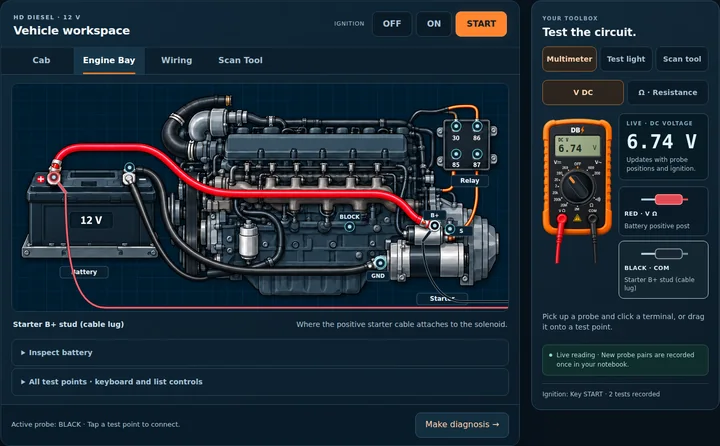
How to test a wheel speed sensor with a multimeter
Learn a generic test sequence for a passive wheel speed sensor: identify the sensor, inspect its wiring, check resistance and observe an AC signal.
Read the guide ↗Hall effect sensorsHow to test a Hall effect sensor
Use a clear supply, ground and signal test sequence for a generic Hall effect sensor, and understand what a digital multimeter can and cannot prove.
Read the guide ↗Coolant temperature sensorsHow to test an NTC coolant temperature sensor
Check a generic NTC coolant temperature sensor with temperature, resistance and signal evidence, without confusing training values with vehicle specifications.
Read the guide ↗Voltage drop testingVoltage drop testing explained for a starter circuit
Learn how loaded voltage-drop testing separates a battery, positive cable and starter ground problem, with a matching No-Crank practice scenario.
Read the guide ↗Electrical exam practiceRed Seal heavy-duty electrical practice: build a test sequence
Build a practical electrical study routine for heavy-duty exam preparation using diagrams, multimeter tests and original generic fault-finding exercises.
Read the guide ↗